Voice Calorie Tracker: How to Log Food by Speaking
By Piyush Kadam ·
Learn what to say when logging meals by voice, which portion details matter, and when to use a photo instead. Includes Tracck’s Android, iOS and AI limits.
- Describe the foods, amounts and preparation instead of naming only the dish.
- Voice logging produces an estimate: review portions, extras and the interpreted meal.
- Tracck supports voice and photo meal logging; the first 3 AI actions are shared across its AI tools.
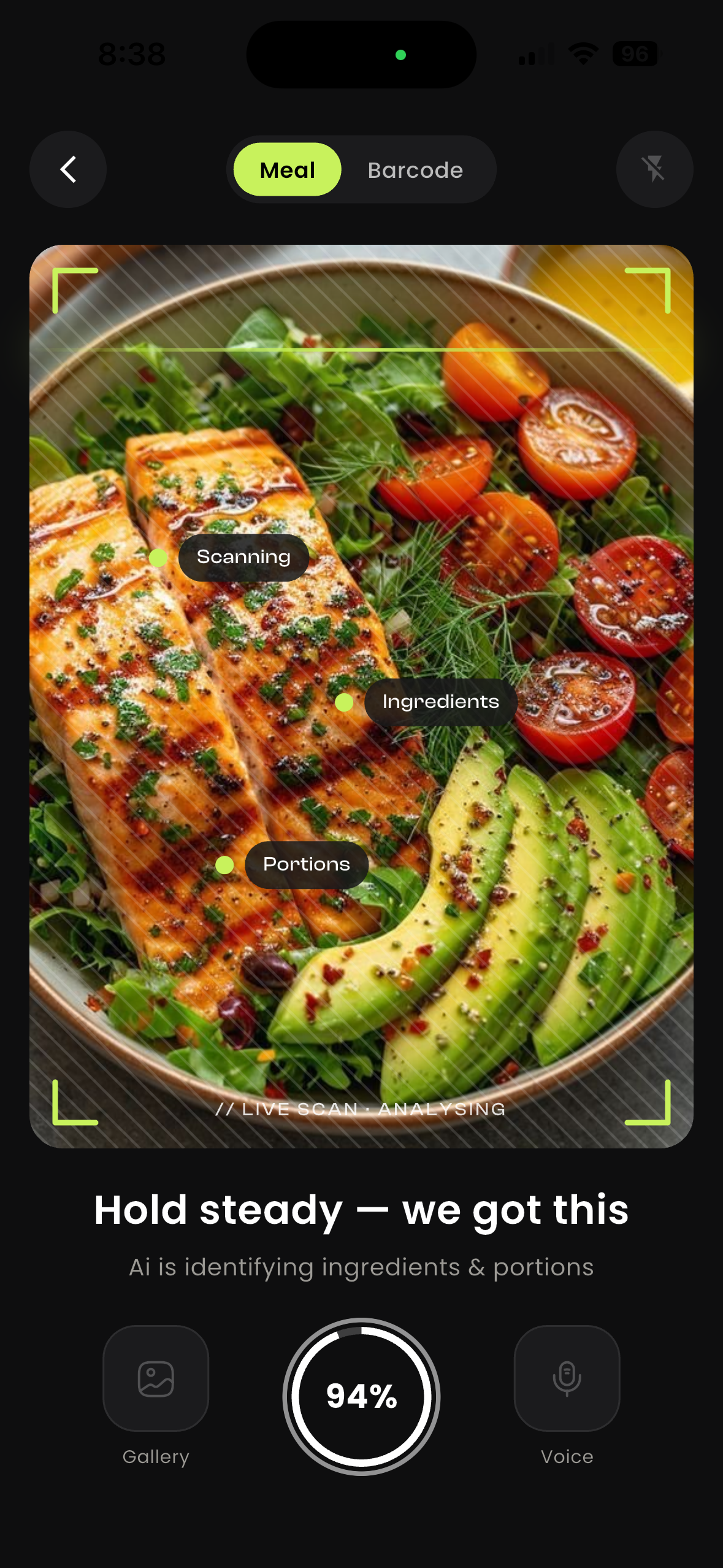
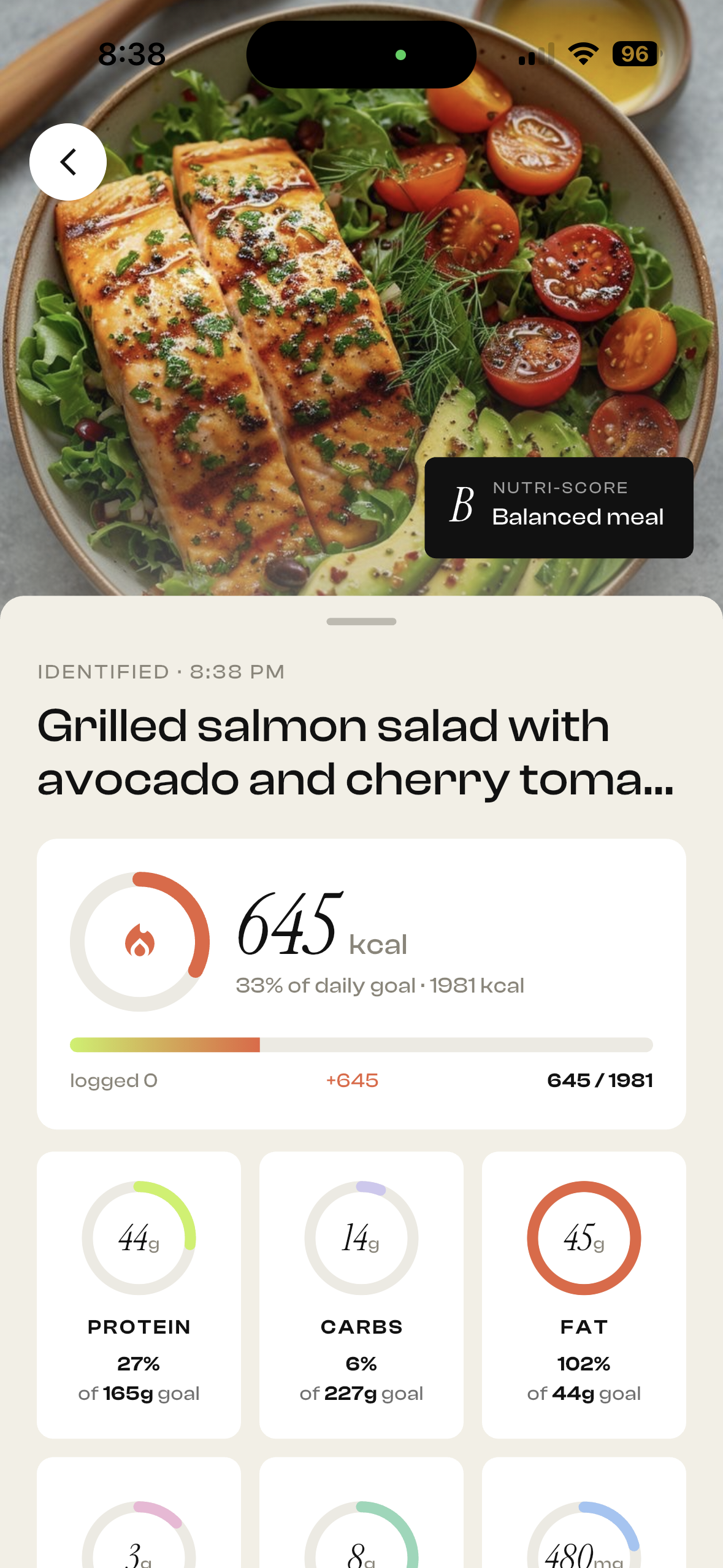
A voice calorie tracker lets you describe a meal instead of searching for every food separately. A useful description sounds like “two slices of toast, two eggs cooked in a teaspoon of oil, and a coffee with milk”. The app interprets the meal and estimates its calories and macros for you to review.
Tracck offers voice meal logging alongside photo scanning on Android and iOS. This guide, written by the Tracck team, explains how to give the estimate useful information and check the result. Speaking is an input method; it does not turn an uncertain portion into an exact measurement.
How to log a meal by voice in Tracck
- 1Open the Calories module and choose voice meal logging. Allow microphone access when your phone asks.
- 2Describe the foods you ate, their amounts and any cooking fats, sauces or drinks.
- 3Finish the recording and wait for the meal estimate.
- 4Check that the interpreted foods match your meal. Review quantities and calorie and macro estimates, and correct the entry as needed before saving.
Start with a familiar meal so you can judge whether the result makes sense. If the recording misses part of your description, do not save a partial meal as though it were complete. Try again with a clearer description or use the photo option when that is easier.
What should you say? Use food, amount and preparation
| Too little detail | More useful description | What it clarifies |
|---|---|---|
| “Eggs and bread” | “Two eggs, two slices of bread, and one teaspoon of butter” | Count and added fat |
| “Dal and rice” | “One cup of cooked rice and one bowl of dal; the bowl holds about 200 ml” | Cooked quantity and bowl size |
| “Paneer curry” | “About 100 g paneer in tomato gravy, with cream, plus two plain rotis” | Main ingredient, sauce and sides |
| “Coffee” | “One mug of coffee with milk and two teaspoons of sugar” | Milk and sweetener |
| “Chicken and rice” | “One cup of cooked rice with grilled chicken and a tablespoon of dressing” | Preparation and extras |
Use amounts you know. If you did not measure the rice, describe your best estimate rather than inventing a gram weight. For a homemade mixed dish, mention what you know about the recipe. The same dish name can describe different portions and ingredients.
Can you log homemade Indian food by voice?
You can describe your meal using dish names and portions, then check what the app understood. “Two plain rotis, a bowl of dal and a small bowl of curd” gives more context than “lunch”. Mention ghee on the rotis or cream in the dal if you know it was added. This is a suggested description to try, not a claim that every regional dish or language is recognised.
If you know the recipe, that information is more useful than a generic dish name. For a shared pot, distinguish the ingredients in the whole recipe from the portion you ate. See the homemade-meal tracking guide for a recipe-and-portion approach.
Voice logging or a food photo: which should you use?
| Situation | Useful starting point | What still needs checking |
|---|---|---|
| You remember the ingredients and quantities | Voice description | Whether each food and amount was interpreted correctly |
| The meal is in front of you | Food photo | Portions, hidden ingredients and preparation |
| You already finished eating | Voice description | Forgotten drinks, dressings or side dishes |
| A packaged item has a nutrition label | Label information | The amount eaten and the number of servings |
A photo can show the plate, while a spoken description can supply details a camera cannot see. Neither method can reliably reveal an unknown amount of oil in a restaurant curry. Choose the easier starting point and keep the uncertainty in mind when reviewing the result.
Why portions and labels still matter
The US National Institute of Diabetes and Digestive and Kidney Diseases distinguishes a portion you eat from a serving listed on a label. When using label information, check both calories per serving and how many servings you actually ate. Voice input does not remove that arithmetic.
For an illustrative calculation, if a label lists 120 calories per 30 g and you eat 60 g, that is two servings: 240 calories. This example explains serving arithmetic, not a recommended intake. A meal estimate is for personal logging, not a substitute for a clinician’s nutrition advice when medical precision is required.
Is voice calorie logging free in Tracck?
Tracck is free to download. Each account includes 3 AI actions in total, shared across voice meal logs, photo scans and AI meal plans. For example, using one voice log and two photo scans uses that initial allowance. It does not reset each day. Tracck Pro unlocks unlimited AI features; local pricing appears in your store’s subscription screen. Core habits and task planning remain free.
Check these details before saving
- All foods are present, including drinks, sides and sauces.
- Counts and units match what you described.
- Cooked and uncooked quantities have not been confused.
- Oil, butter, ghee, cream and sugar are included when known.
- The entry represents your portion, not the entire shared recipe.
Build the tracker you actually need
tracck starts with Home and lets you snap on Habits, Calories and To-do — only what you want, nothing you don't.
Download tracck